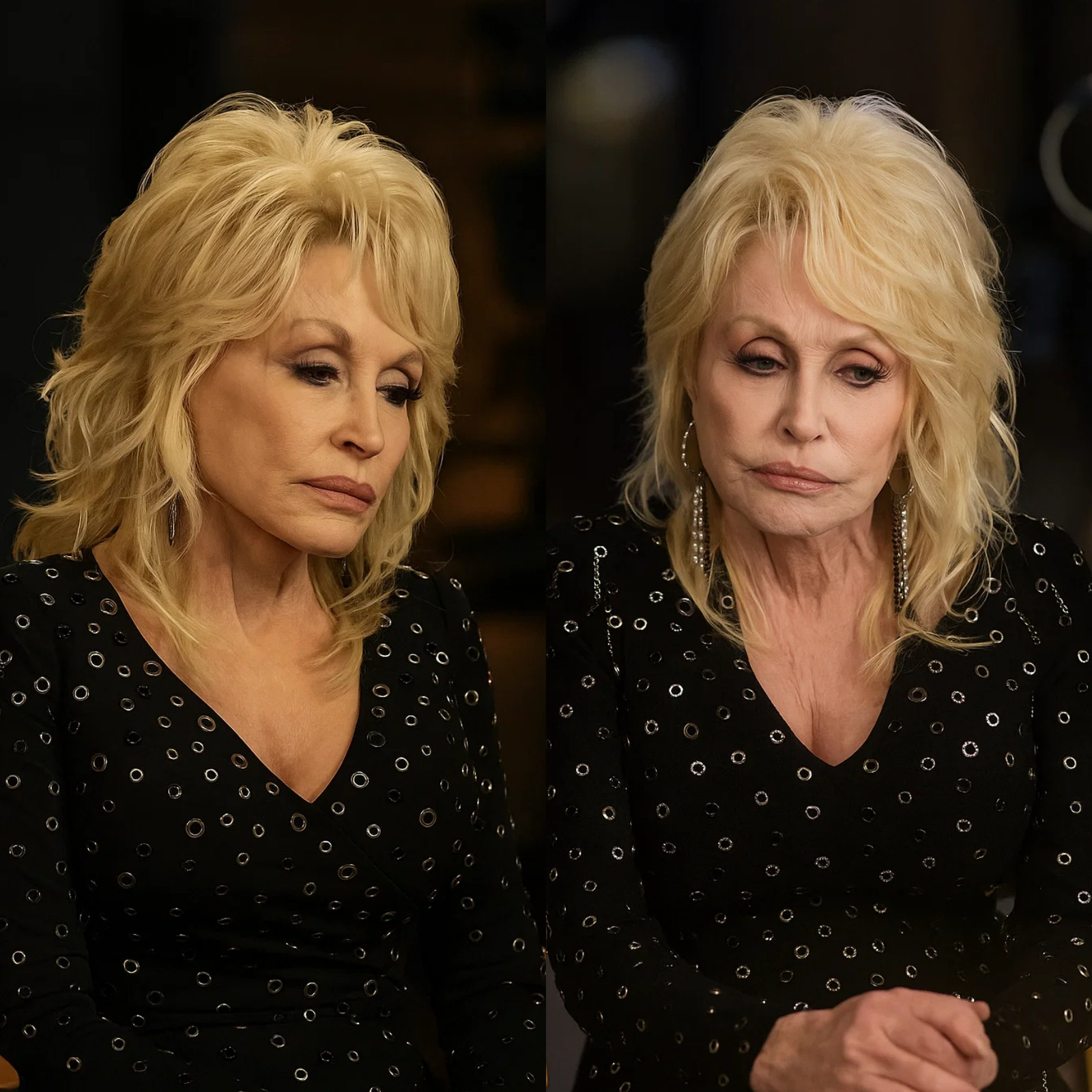
For decades, Dolly Parton has been more than a country singer. She has been an emblem of resilience, authenticity, and hope — a voice that carried the struggles of ordinary people into ballads that touched the extraordinary. From the hollers of Tennessee to the grandest stages in the world, her story was one of light, laughter, and an unbreakable will. But behind the sequins, the rhinestones, and the radiant smile, whispers persisted: there was something unsaid.
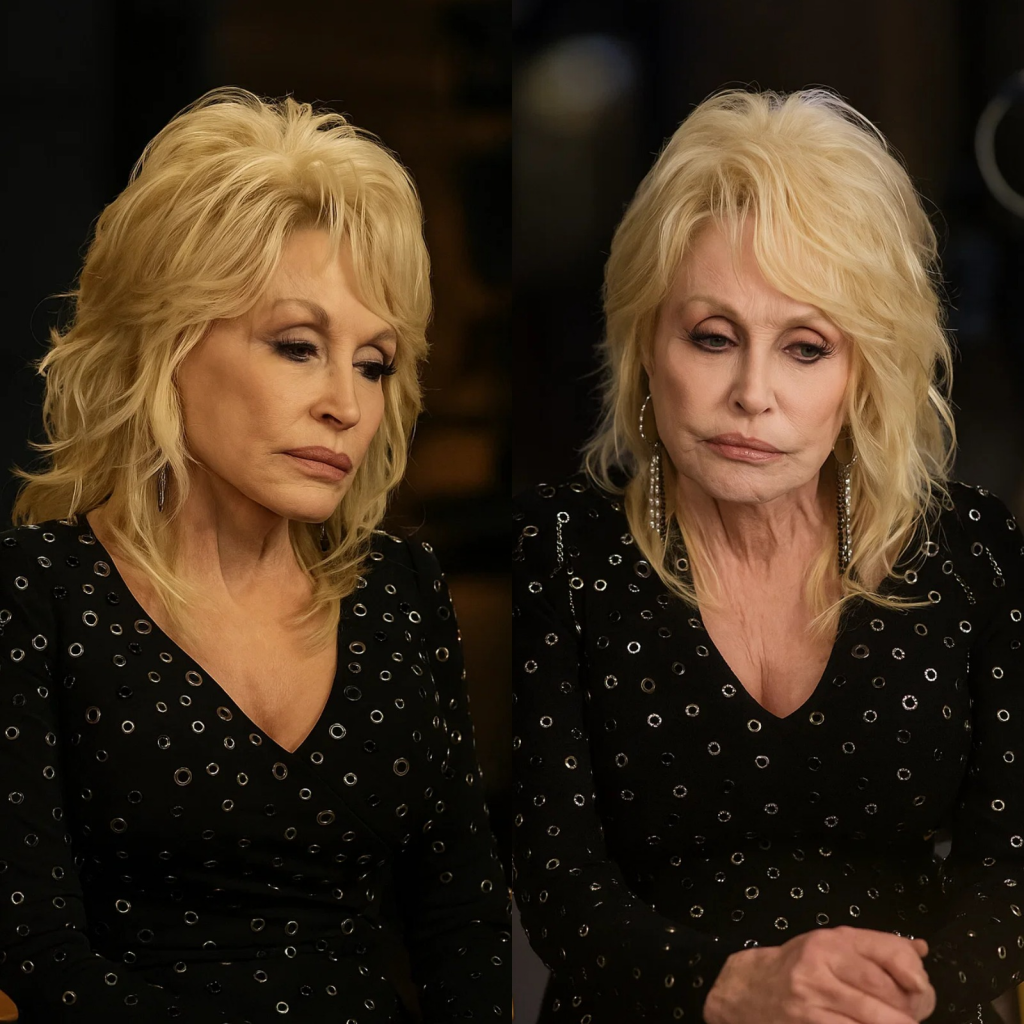
Now, after years of silence, Dolly herself has finally revealed what many long suspected — and what few ever dared to confront. Her words, trembling with both vulnerability and defiance, have shaken fans to their core. The revelation is not simply a confession; it is a reminder of the hidden costs of fame, the sacrifices made for music, and the enduring humanity of one of America’s most beloved icons.
A Legacy of Song, A Life of Secrets
Born in 1946 in a one-room cabin in Sevier County, Tennessee, Dolly Rebecca Parton grew up in poverty but with a richness of spirit and family ties that shaped her very essence. From the earliest days, music was her language, her escape, and her promise of something greater.
Her songs often bore the fingerprints of her upbringing: tales of longing, resilience, family devotion, and heartbreak. Tracks like “Coat of Many Colors” and “Jolene” became not only chart-toppers but cultural touchstones, narratives that seemed deeply personal, yet universally relatable.
And yet, even as her fame soared, Dolly was often asked a different kind of question. Not about her songs or career, but about her personal life. Why didn’t she have children? Was it by choice, by circumstance, or by some deeper pain?
Dolly, ever gracious, always handled these questions with humor, charm, or a simple redirect. She hinted that it was a choice — that her career was her “baby.” She spoke of her love for her nieces, nephews, and godchildren. She smiled, joked, and carried on.
But now, in a moment that has left even longtime fans stunned, Dolly has admitted that the truth was far more complicated.
The Confession
“I couldn’t hide it forever,” Dolly said in a recent interview, her voice carrying both fragility and strength. “People thought it was choice. And yes, in some ways it was. But not all. There were sacrifices I made… and heartbreaks I carried quietly. Some things you can’t share when you’re still in the middle of living them.”
The admission stunned audiences. What she revealed was not a single event, but a lifelong tension — the choice between her health, her private struggles, and the career that defined her. Dolly confirmed what close confidantes already knew: her journey into motherhood was never simple. Medical complications, demanding schedules, and personal crossroads forced her to accept a life path she hadn’t entirely chosen.
“Music was my calling,” she added. “But it cost me something I can never replace. And that truth has lived inside every song I’ve ever sung.”
The Burden of Silence
Why did it take so long for Dolly to speak these words? Fans and commentators alike wonder why an artist known for her openness and generosity of spirit waited decades to admit this truth.
The answer, as Dolly suggested, lies in the burden of silence. For women of her generation, especially in the world of country music, vulnerability was both dangerous and misunderstood. To admit struggle, pain, or loss risked being seen as weakness.
Instead, Dolly channeled her emotions into her work. Songs like “I Will Always Love You” and “Eagle When She Flies” became vessels for feelings too heavy to explain outright. “People think those songs are about love or relationships,” she explained, “but sometimes they were about me talking to myself, or to the life I thought I’d have but never did.”
The stage was her confessional, but her audience never knew the full story. Until now.
Fans React: Shock, Empathy, and Love
The revelation has sent shockwaves across social media. Thousands of fans have responded not with judgment, but with overwhelming empathy. For many, Dolly’s story echoes their own struggles — of infertility, difficult choices, or the sacrifices made between career and family.
One fan wrote, “Dolly just reminded us that even legends are human. She gave up something for her art, and now that art means even more.”
Another added, “This isn’t weakness — it’s strength. She carried this alone for so long and still gave the world so much light. That’s what makes her an icon.”
The response has been, in many ways, the opposite of what Dolly once feared. Instead of diminishing her, the truth has only deepened fans’ respect.
The Cost of Greatness
Dolly Parton’s revelation highlights a universal truth about greatness: it often demands sacrifice. For some, that sacrifice is time, relationships, or privacy. For Dolly, it was motherhood.
But rather than frame her life as a story of loss, Dolly insists on seeing it as one of transformation. “I may not have had children of my own,” she said, “but I feel like I’ve mothered the world through my music, through my charities, and through the love I’ve tried to give.”
Indeed, her philanthropic work — including her Imagination Library, which has provided over 200 million free books to children worldwide — is evidence of a nurturing spirit that transcends biological ties. Her songs, too, have acted as lullabies, anthems, and lessons for countless listeners.
In her own way, Dolly has been a mother figure to millions.
Why Now?
The question remains: why now? Why, after all these years, did Dolly finally break her silence?
Her answer is both simple and profound. “I’m at a point in my life where I don’t have to prove anything anymore,” she said. “I want people to know me for me — not just for the songs, or the wigs, or the laughter. But for the whole story. Even the parts that hurt.”
At 79, Dolly Parton has nothing left to prove. She has secured her legacy as a singer, songwriter, actress, philanthropist, and cultural icon. But in choosing to reveal this truth, she has ensured her story will be remembered not only for its triumphs but also for its humanity.
The Woman Behind the Legend
In many ways, this revelation completes the portrait of Dolly Parton. Not as an untouchable star, but as a woman who lived with choices, sacrifices, and regrets — just as her fans do.
It is a reminder that every dazzling performance, every sparkling gown, every soaring ballad was not free. It was bought with personal cost, with a quiet sacrifice hidden beneath the glitter.
And yet, Dolly does not regret. “I did the best I could with what I was given,” she reflected. “And I hope that in sharing this now, maybe someone else will feel less alone.”
The Legacy Continues
Dolly Parton’s music will outlive her, as will her truth. By finally revealing the story behind her silence, she has ensured that her legacy is not just one of songs, but of honesty, courage, and humanity.
The world now sees her not only as the queen of country music but as a woman who carried hidden heartache with grace — and who, in her own time, chose to share it.
As one fan eloquently put it: “Dolly didn’t just give us music. She gave us herself. And now we understand that gift even more.”
And perhaps that is the real revelation: that the greatest stories are not always sung, but sometimes whispered — late, fragile, and finally, free.